48° and Clear
Image
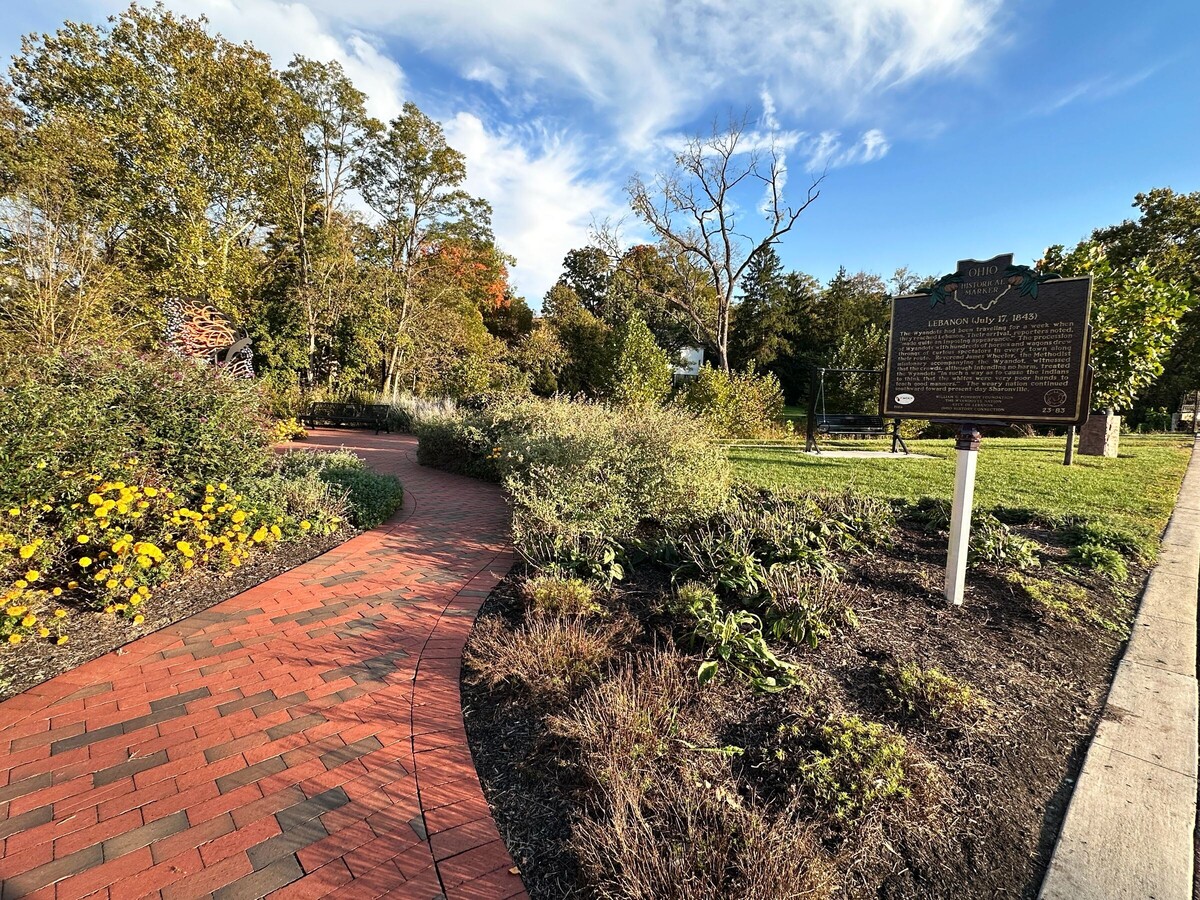
The marker is located in Cedar City Park, next to the Lebanon Train Station, and is available for the public to visit.



LEBANON, OH — On July 17, 1843, nearly 700 Wyandot people, accompanied by hundreds of horses and wagons, passed through Lebanon on a journey they had not chosen to make. More than 183 years later, a new historical marker in Cedar City Park ensures that their story will not be forgotten. It's a chapter of Ohio history that many residents may never have known.
Dedicated Monday, Oct. 12, on Indigenous Peoples' Day, the marker commemorates the forced removal of the Wyandot people from their Ohio homeland in 1843 and their passage through what is now Warren County.
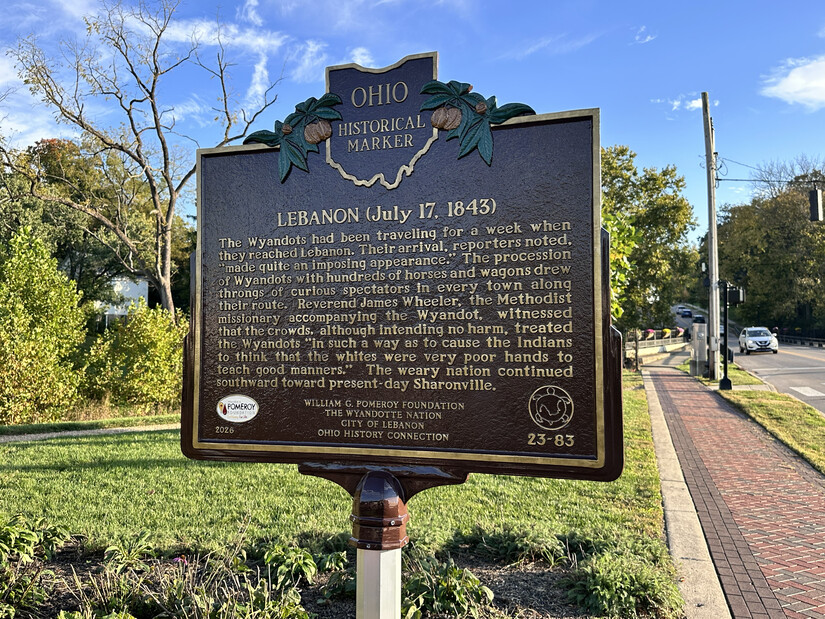 The front of Lebanon's new Ohio Historical Marker commemorates July 17, 1843, when the Wyandot people passed through the community during their forced removal from Ohio. The marker, dedicated Oct. 12, 2026, at Cedar City Park, describes the procession and the reaction of spectators along the route.
The Wyandot were among the Indigenous peoples who inhabited the Great Lakes region long before Ohio became a state. They established communities, cultivated farmland and built homes and maintained a rich cultural heritage. However, as settlers moved westward and pressure increased for Native American lands, the Wyandot were eventually forced to surrender their remaining territory in northern Ohio.
In July 1843, more than 600 Wyandot people began a difficult journey of approximately 150 miles from Upper Sandusky to Cincinnati, where they boarded steamboats bound for lands west of the Mississippi River. Their route took them through Lebanon, where the new marker at Cedar City Park, 200 S. Broadway St., now reminds visitors of that passage.
According to the marker, the Rev. James Wheeler, a Methodist missionary who accompanied the Wyandot people, observed that crowds gathered to watch the procession of hundreds of horses and wagons. Although the spectators apparently meant no harm, their behavior struck the Wyandot as disrespectful.
The inscription quotes Wheeler as saying the crowds caused the Wyandot to think that white people were “very poor hands to teach good manners.”
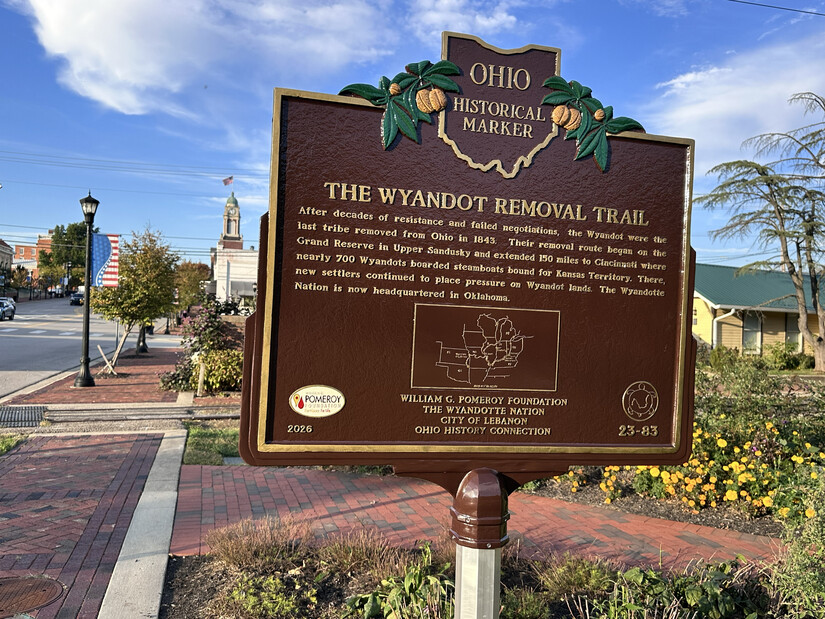 The reverse side of Lebanon's newly dedicated Wyandot Removal Trail marker explains the forced removal of nearly 700 Wyandot people from Ohio in 1843. The marker is located at Cedar City Park, with Lebanon's historic downtown visible in the background.
For approximately six years, University of Cincinnati history professor Rebecca S. Wingo and her students have worked alongside the Wyandotte Nation, now headquartered in Oklahoma, to research and document the removal.
The project began after Wingo discovered an older historical marker that described the forced removal as a simple departure or journey, language that failed to convey what had actually happened.
Working with members of the Wyandotte Nation, students researched historical documents, developed digital maps and timelines, and helped prepare applications for new historical markers along the original route.
The Lebanon marker is part of a larger effort involving the Wyandotte Nation, the University of Cincinnati and the Ohio History Connection to place historical markers throughout Ohio. The first marker was dedicated in Upper Sandusky in October 2025. Two more were dedicated this year, in Lebanon and North Bend, with additional markers planned in the coming years.
Although the Wyandot were forcibly removed from Ohio more than 180 years ago, their descendants continue to preserve their culture, traditions and history. For Lebanon residents and visitors, the new marker offers an opportunity to reflect on a part of Warren County's past that deserves to be remembered.
The marker is located in Cedar City Park, next to the Lebanon Railway Station, and is available for the public to visit.


Sunny, with a high of 65 and low of 37 degrees. Sunny for the morning, clear in the afternoon and evening,