55° and Overcast
Image
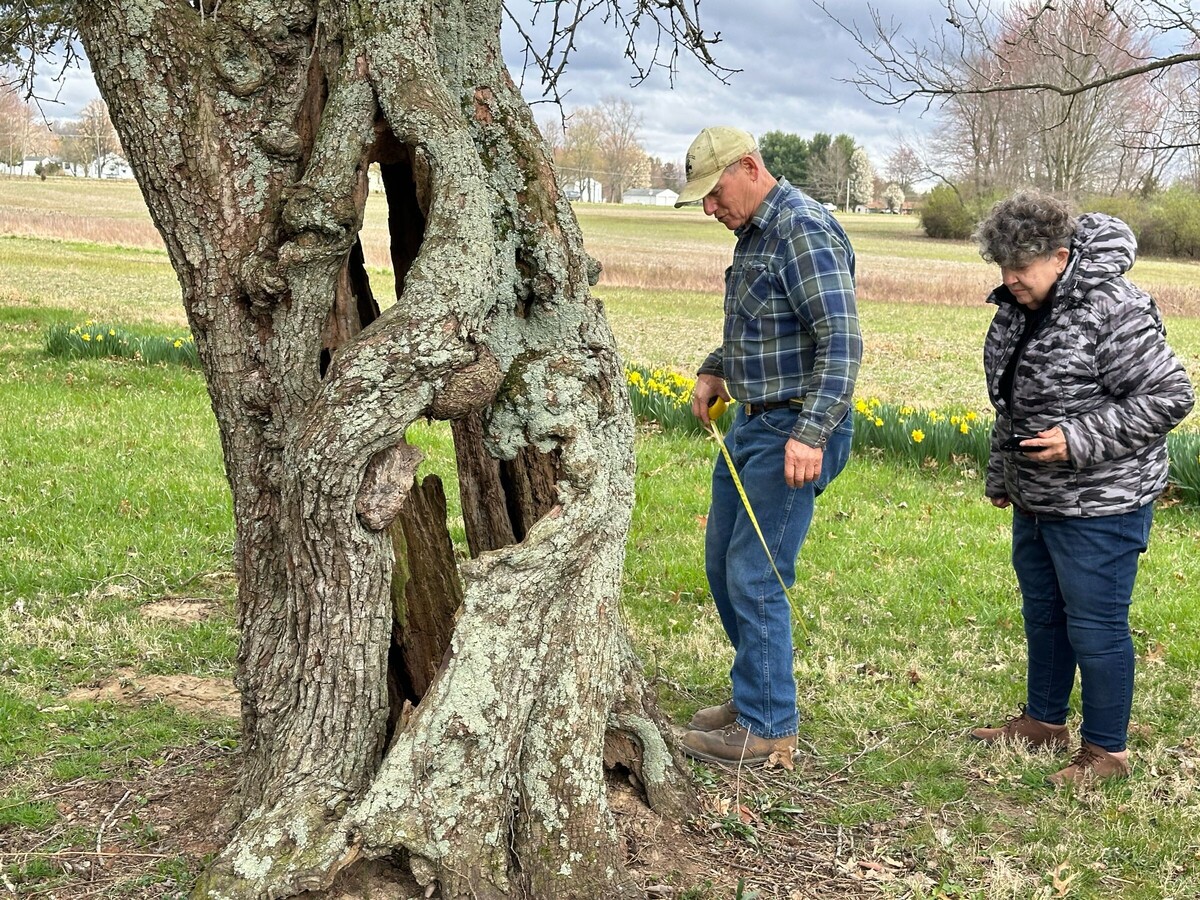
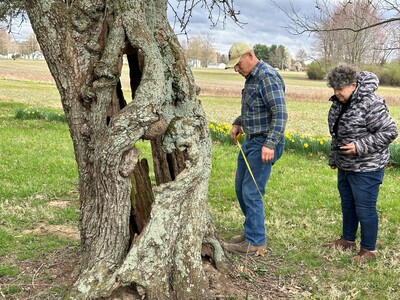
Sharon and her husband Roger Martin checking out their Johnny Appleseed Pear Tree in March of 2024



MORROW, OHIO — On a family farm in Warren County stands an enormous pear tree that has survived generations, weathered countless storms and carried a story dating back to the days when Ohio was still being settled.
According to a story passed down through Sharon Franek's family, the tree was planted by John Chapman, better known as Johnny Appleseed.
Now, more than two centuries after Chapman traveled through Ohio establishing fruit tree nurseries, historians and tree enthusiasts are taking a closer look at the tree — and finding reasons to believe the family's story may be true.
Marlen Mathias, a descendant of the Chapman family; Chad Armentrout, owner of Stillwater Valley Orchard and Apiary; and Eli Collamore, who operates the Big Tree Boss social media page, visited the property to examine the tree and learn more about its history.
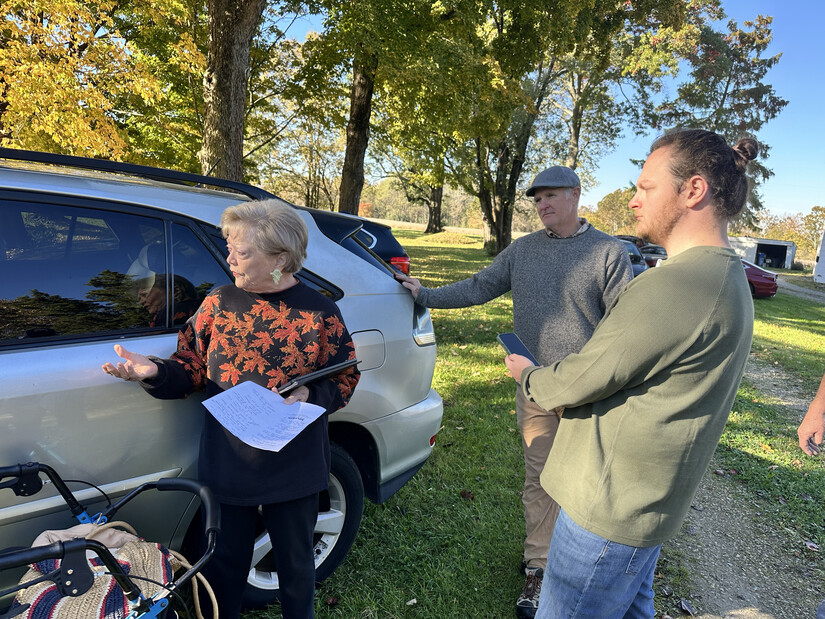 Marlen Mathias, Chad Armentrout and Eli Collamore met out on Sharon's farm with her to see and document the pear tree that passed down history has that Johnny Appleseed planted.
All three believe the tree's connection to Johnny Appleseed is credible, although definitive documentation establishing who planted it has not yet been found.
The family's history centers on Ben Watkins, an elderly resident who lived at the farm when Franek's grandmother operated a nursing home there.
According to the family's account, Watkins repeatedly told them that Johnny Appleseed planted three pear trees on the property, along with additional pear trees on two neighboring farms.
Today, only one of those trees is believed to remain.
Historical accounts place Chapman in the Little Miami River region near Lebanon around 1826, a period consistent with the tree's estimated age.
Chapman was more than the wandering character often portrayed in children's stories. He was a nurseryman and businessman who established orchards and sold young trees to settlers moving west.
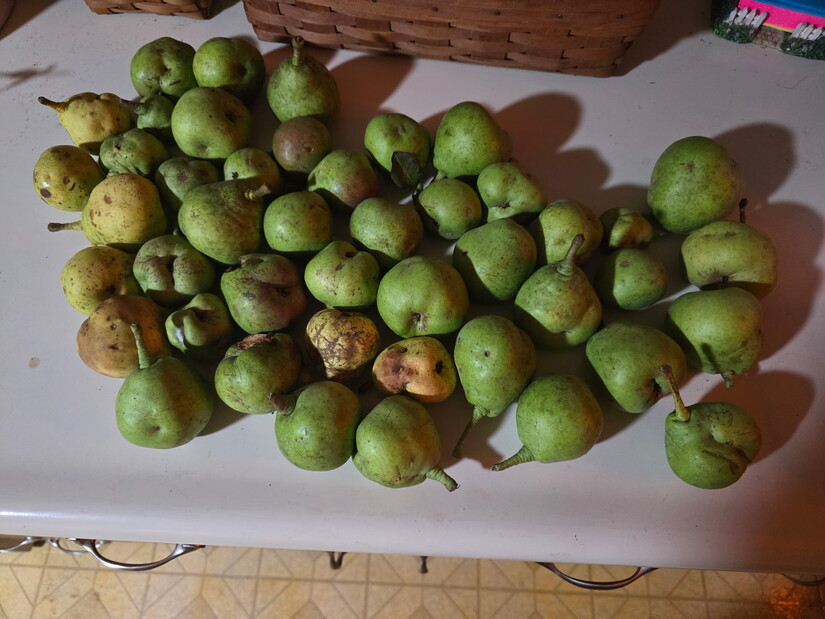 Photo courtesy of Roger Martin of some of the pears gathered this spring.
Fruit trees were particularly important during Ohio's early settlement. Some land agreements required settlers to plant orchards as evidence that they intended to improve and occupy their property rather than simply speculate on land.
This practice created a market for Chapman's young trees and provides historical context for why he may have planted orchards in the region.
Beyond its possible connection to Johnny Appleseed, Franek's tree may qualify for another distinction.
Collamore believes it could be the largest common pear tree in Ohio and among the largest pear trees in the United States.
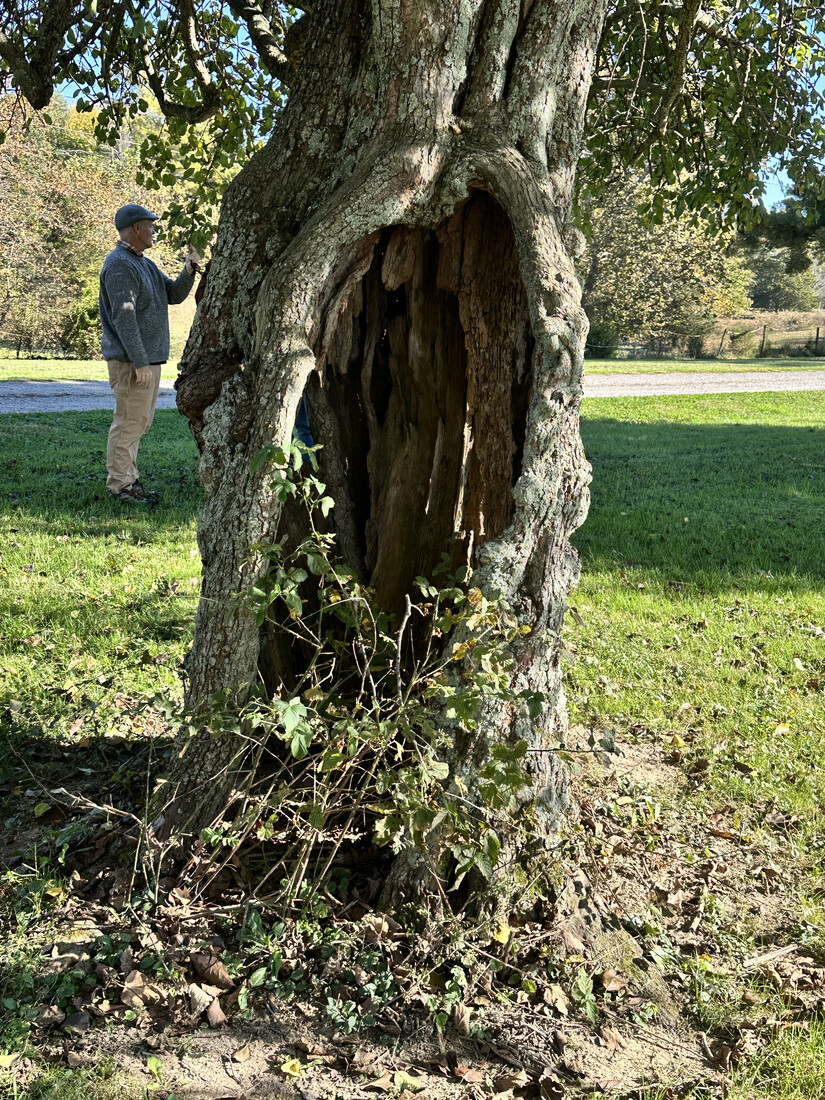 While the tree is still producing fruit, its center has been hallow for many years making it difficult to tell how old it actually is by the naked eye since there are no rings to count.
He is working to document its measurements and pursue recognition through Ohio's champion-tree program.
Determining the tree's exact age is difficult because its massive trunk is hollow. Counting growth rings, traditionally the most accurate method of establishing a tree's age, cannot provide a complete answer.
Researchers are also collecting leaf samples for genetic testing to learn more about the pear variety and its ancestry.
Armentrout, who is involved with the Johnny Appleseed Museum, visited the farm to graft the historic tree, a process that allows new trees to grow from living material taken from the original.
His orchard markets descendants under the name "Chapman's Lost Pear," giving others an opportunity to grow trees connected to the Franek family's history.
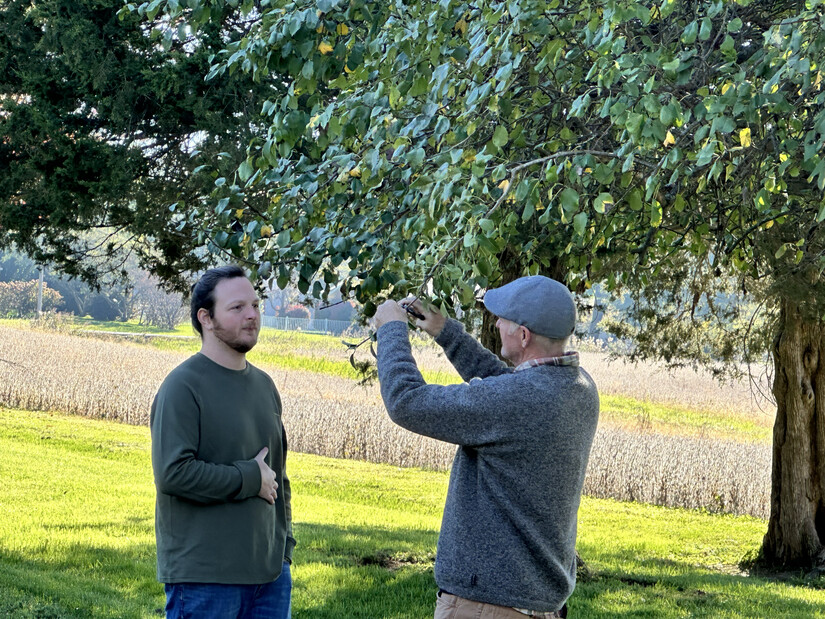 Chad shares with Eli how he goes about graphing a tree, which he is doing wiht this pear tree.
The original tree has also provided something unusual beyond its fruit. Franek's late husband once fashioned a knife from one of its limbs and sold it, creating a handcrafted piece of the tree's history.
Whether John Chapman personally planted the tree may never be established beyond doubt. But the family's account, the historical evidence of Chapman's travels and the tree's extraordinary size have brought renewed attention to this Warren County landmark.
And with efforts underway to document its size, identify its ancestry and preserve it through grafting, a tree believed to have roots in Ohio's earliest days may continue growing for generations to come.


Patchy rain nearby, with a high of 60 and low of 53 degrees. Patchy rain nearby for the morning, overcast in the afternoon and evening,