Image
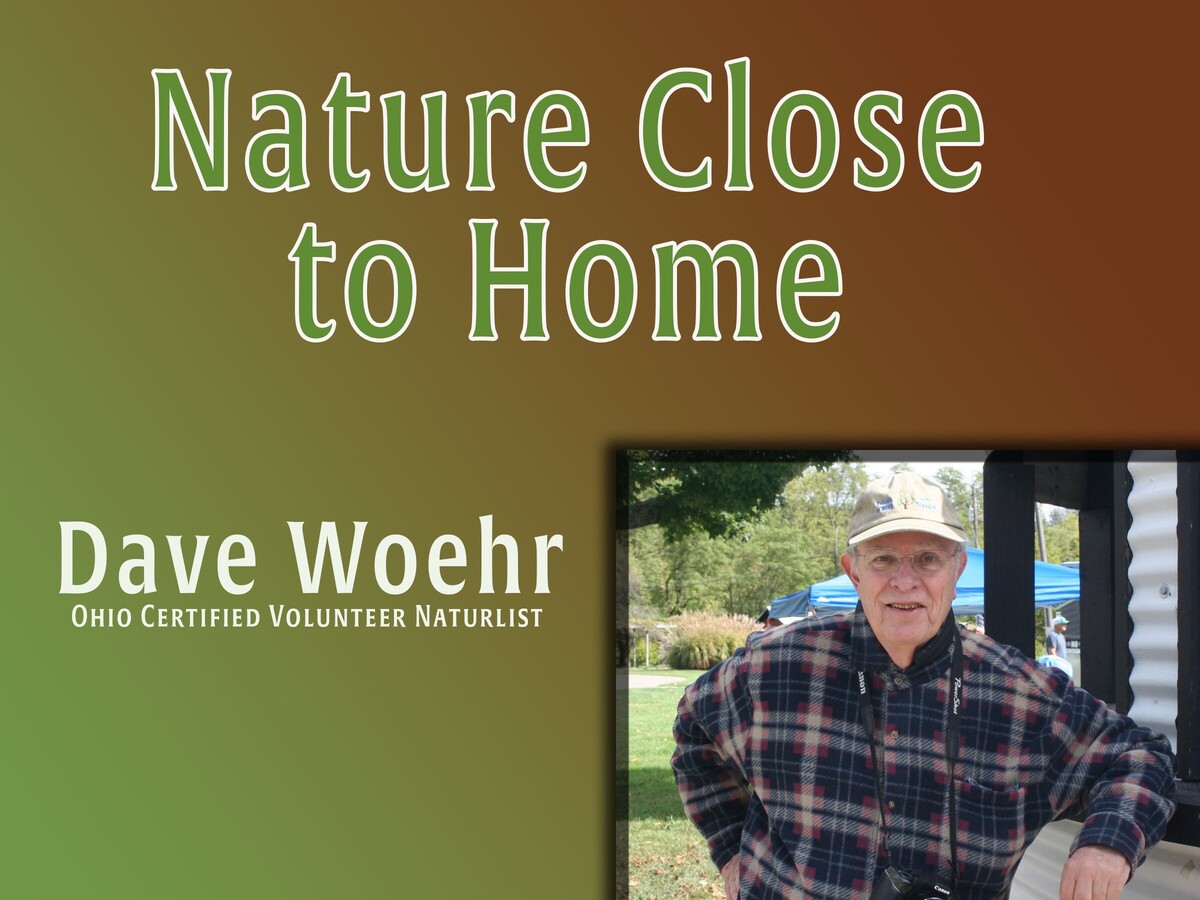
Nature Close to Home and Ohio Certified Volunteer Naturalist Dave Woehr shares monthly naturalist stories.



WARREN COUNTY, OH --
Forty years ago, I was a young outdoorsman who enjoyed hunting wild
game in southern Ohio’s fields and forests. Those days are long
gone. Now, I enjoy waiting for my social security check to arrive
every month.
I have given away most of my hunting firearms and no
longer buy an annual Ohio hunting license. Instead, I subscribe to
the Wild Ohio Magazine, where I can keep track of what’s happening
afield these days, without traipsing over the hills and valleys I once
could roam without getting short of breath.
A lot
has changed in the wildlife arena over the last forty years.
Wildlife populations have fluctuated significantly - up for some
species while down for others. For instance, deer and turkey
populations have grown dramatically. On the other hand, populations
of upland game birds have drastically declined.
These fluctuations
are in large part due to habitat changes that are the result of how
we manipulate the natural landscape. Commercial, residential, and
agricultural changes that alter the natural habitat are quickly
noticed by the resident wildlife. If their needs are no longer
satisfied where they’ve been living, they leave in search of better
conditions.
Many of
the upland game birds ,once well-established here, are seldom seen
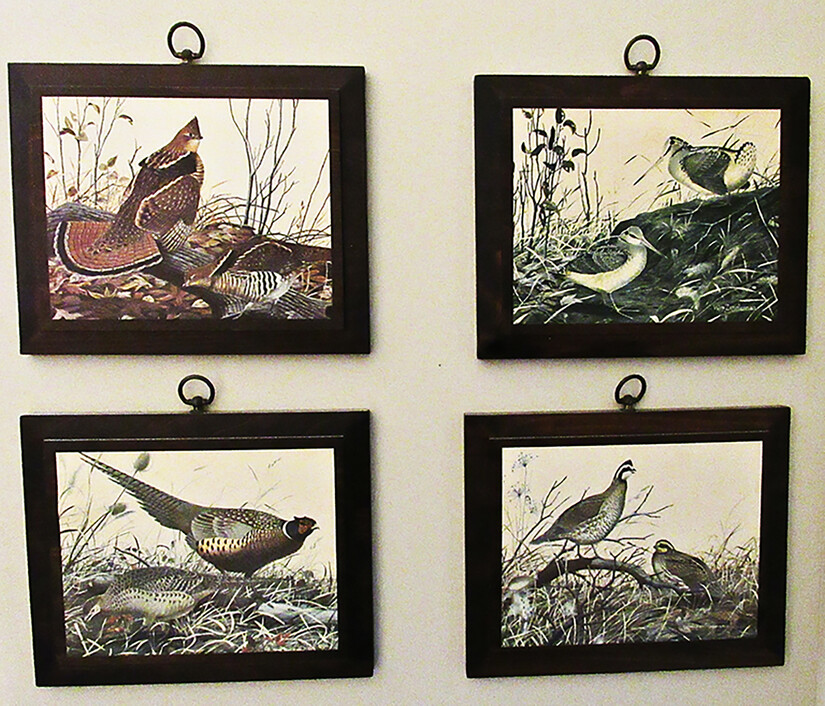
these days. But, I have my memories of them. Every day I see
pictures of four of my favorites on the wall of my den.
Here
clockwise from the upper left are the Ruffed Grouse, the American
Woodcock, the Northern Bobwhite, and the Ring-necked Pheasant.
Grouse have become scarce because our young forests of the early
1900’s have matured and shaded out the undergrowth and food sources
they need. Decades ago, I could flush several grouse a day... even
without a bird dog. The bag limit was 3 birds a day. Today, the bag
limit has been reduced to one bird a day, and hunting for them is
restricted to specified locations in just a few counties.
Woodcock populations
have declined throughout their range due to their dependence on
wetland habitat. They prefer the moist edges of streams, marshes,
bogs, and flood plains. Those habitats have been greatly reduced
with the passage of time. The Woodcock is a migratory game bird, and
the hunting season and bag limits for this species is federally
regulated in Ohio and other states throughout the eastern United
States.
When I first came to Ohio in 1959, the Northern Bobwhite was
classified as a song bird and could not be legally hunted. As their
numbers grew, a huntable population convinced the Division of Wildlife
to declare the Bobwhite a game bird. A hunting season was
established with a liberal daily bag limit in southwest Ohio. I can
recall flushing coveys of 20-30 of these little quail right here in
Warren County without the help of a bird dog. We had about 20 years
of decent quail hunting here, until their population crashed due to
consecutive severe winters in the late 1970s and habitat reduction
associated with new clean farming methods. Today, bag limits have
been severely reduced, and hunting quail is only permitted in 16
southern counties on private land where permission of the landowner
is required. I can’t remember the last time I heard one of their
cheerful “Bob White” calls.
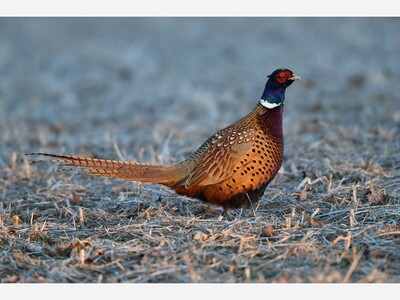
The Ring-necked
Pheasant was perhaps the premiere game bird in Ohio. It is a gaudy
oriental species that was introduced to the United States in the late
1800s and early 1900s specifically for hunters to pursue. These
birds thrived, and their population exploded in great numbers across
much of the far western and the northern tier of our states. The
small brushy farms and the crops they produced were just what the
pheasants needed to support their lifestyle. But, the small 40-acre
“dirty” farms of bygone times have disappeared and have been
replaced by mega-farms so cleanly farmed that adequate cover doesn’t
exist to support wild pheasant populations. Although there are still
substantial wild pheasant populations in the Dakotas and a few other
states, wild birds in Ohio are about gone today. To satisfy Ohio
hunters’ desire to hunt pheasants, the Department of Wildlife
pen-rears thousands of birds for release each fall into public
hunting lands, scattered throughout the state.
For me, hunting wild
game has never been all about putting meat on the dinner table.
Rather, it has been more about being out in natural habitats with
like-minded friends; seeing wildlife, getting some exercise, smelling
the gun smoke in the air and laughing about those shots that missed
the quarry... allowing it to see another day.

Sunny, with a high of 64 and low of 38 degrees. Sunny during the morning, clear during the afternoon and evening,