Image
Nature Close to Home and Ohio Certified Volunteer Naturalist Dave Woehr shares monthly naturalist stories.



WARREN COUNTY, OH --
We are so fortunate to live where the climate permits us to have
hardwood forests. We take our trees for granted. We are often too
busy with our daily routines to admire our trees in their natural
settings. Oh, we may like the Pink Dogwood or the Weeping Cherry
trees that we paid big bucks for when we landscaped around the house.
Sometimes that’s as far as our appreciation of trees goes. Many
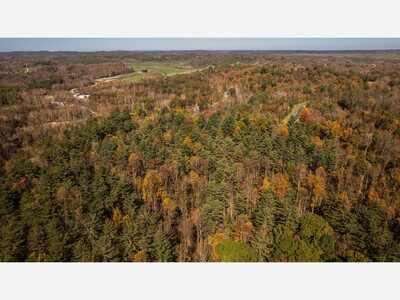
of us have forgotten that there was a mature virgin hardwood forest
here a little over two centuries ago. It was ninety-five percent
destroyed by our pioneer ancestors as they built cities and roads,
and cleared the land for farming. Most of the trees we see now as we
drive hither and yon are second or third growth natural regeneration.
Today
we have over 100 natural tree species growing primarily in fragmented
parcels throughout Ohio. In addition to those natural species there
are a number of invasives. Oak, maple, hickory, walnut and beech are
several of the prized hardwoods we have here in Ohio. But another
prominent tree in our area is the Catalpa. The Catalpa may not have
been part of the Ohio virgin forest. If it was, it was probably only
in a few southern counties. Many Catalpas were brought to our area
from the south where they were well established. They are
fast-growing and with their dinner plate-sized heart-shaped leaves
they provided much-needed shade in areas that had been deforested.
Catalpa leaves may be the largest of any tree in the state. They are
a lighter shade of green than most of our hardwoods. In fact they
are nearly the same color as the yellowish-green leaves on the
sunflower plants in my garden.
Aside
from its big leaves, the Catalpa has other distinguishing
characteristics. It can reach nearly seventy-five feet in height.
Shortly after leafing out in the spring it produces a dense covering
of orchid-like blossoms about two inches across.
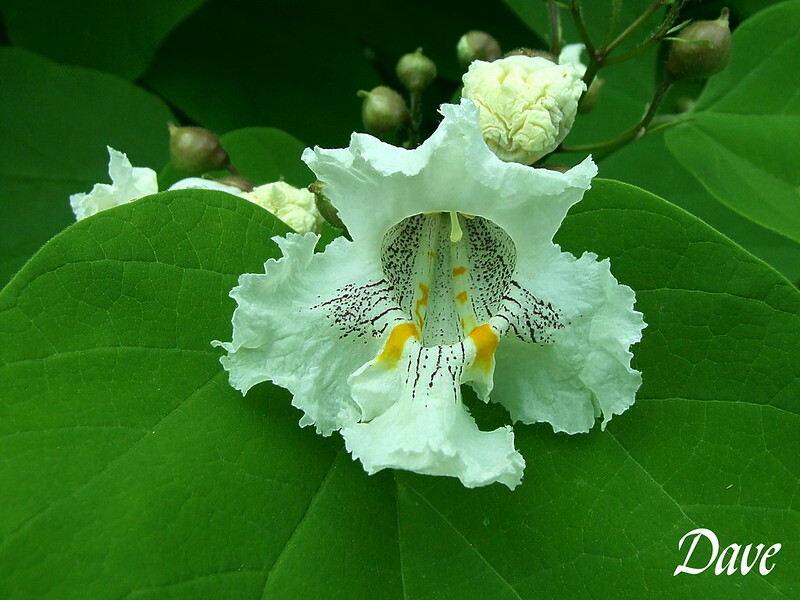
The
blossoms are in place for several weeks before producing bean-like
seed pods up to a foot and a half in length.
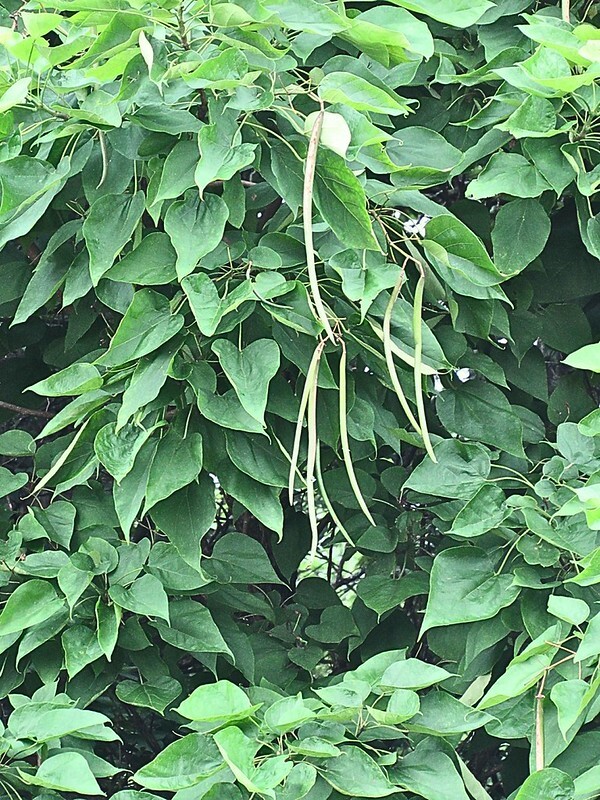
In
the fall the seed pods open and release hundreds of tiny winged seeds
that
sail through the breezes and land in my gardens where they germinate.
Weeding the seedlings gives me something to do in my spare time.
It’s best to pull them when they first appear because they will
quickly anchor in the soil with a deep taproot.
The
Catalpa Tree is host to the Catalpa Sphinx Moth.
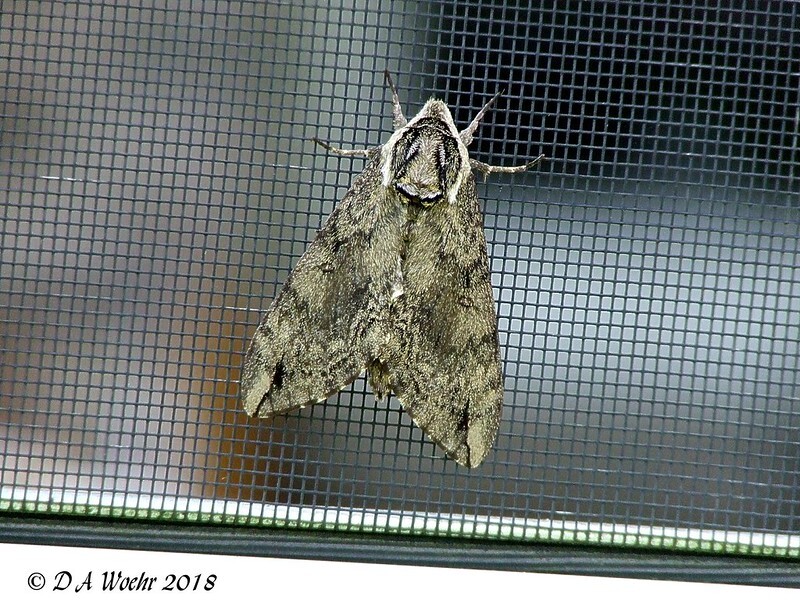
The larvae of this moth devour the leaves with gusto. When
caterpillars are numerous, infested trees may be completely
defoliated.
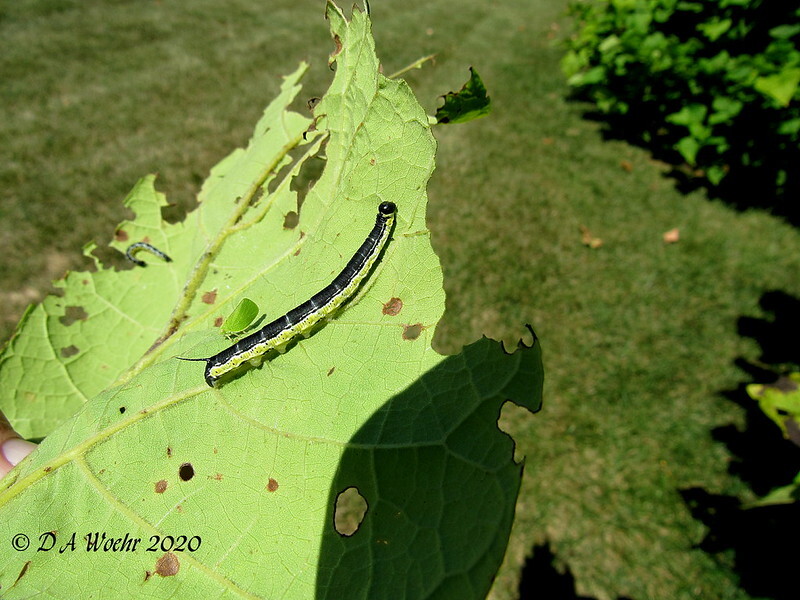
Defoliated Catalpas
produce new leaves readily, but with multiple generations of
larvae occurring,
new foliage may be consumed by subsequent broods.
These caterpillars are good bait when fishing for bass, bluegill,
perch, sunfish, and crappie. When I was a kid growing up in Ft.
Wayne, I remember my father collecting Catalpa “worms” to fish
the lakes of northern Indiana and southern Michigan. We had a lot of
fish-fry family dinners in those days. Good times.
You
probably have one or more Catalpa trees near where you live. Take a
look around and see if you can spot one.



Sunny, with a high of 69 and low of 45 degrees. Sunny during the morning, clear in the afternoon and evening,