

Image
https://en.wikipedia.org/wiki/Caleb_Atwater
 Caleb Atwater Remarkable Ohio
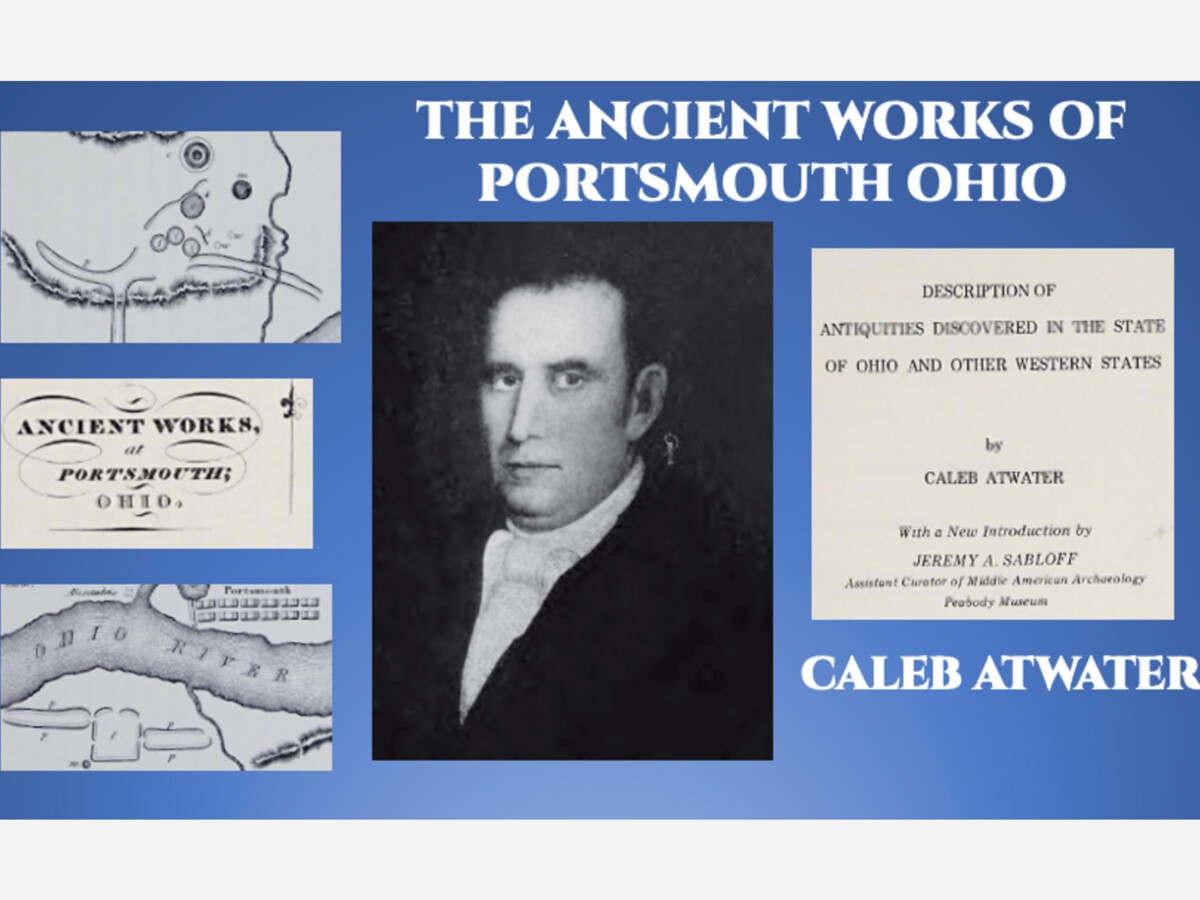
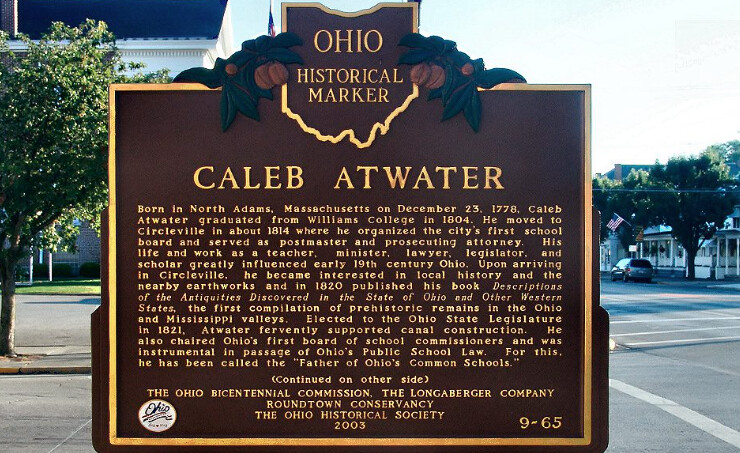
Early Ohio historian Caleb Atwater, whose 19th-century writings helped preserve the memory of the ancient earthworks near Portsmouth, Ohio is featured in the following video -
Caleb Atwater was one of the earliest Americans to carefully record the vast earthen embankments, geometric enclosures, and raised mounds that once stood near the mouth of the Scioto River. The video highlights his account of the “Ancient Works at Portsmouth,” describing long parallel walls, defined gateways, and expansive square and circular earthworks that point to deliberate design and skilled construction. Long before archaeology emerged as a formal discipline.
The large complex near the mouth of the Scioto River was still substantially visible when Caleb Atwater described it in 1820. By the time Ephraim George Squier and Edwin Hamilton Davis surveyed it in the 1840s, portions had already been damaged by plowing and settlement, but major embankments were still traceable.
1820 — Caleb Atwater publishes early descriptions of Ohio antiquities.
1848 — Ephraim Squier & Edwin Davis publish their systematic, measured surveys.
1850s–1870s — Charles Whittlesey contributes geological and archaeological analysis and commentary.
The story reaches further back as well. In January 1773, Baptist minister David Jones
passed the same landscape, camping at a place he called Red Bank near the river’s mouth. His journal offers a rare snapshot of the valley decades before Atwater surveyed it, when Shawnee towns stood upstream and the region remained Native ground.
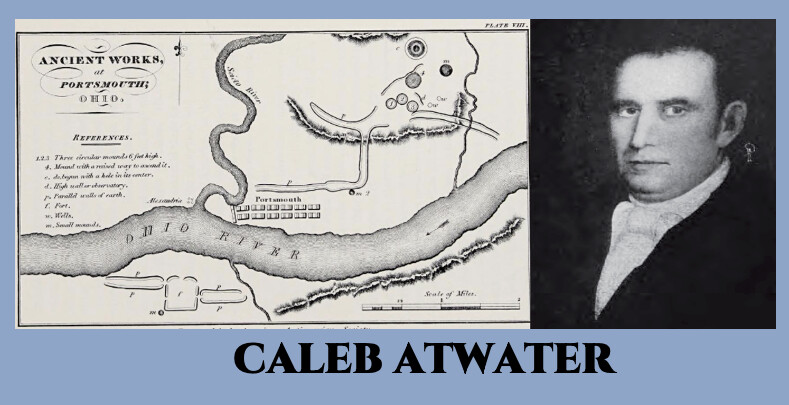
Together, Jones’ firsthand observations and Atwater’s careful measurements form a bridge between frontier Ohio and the deep Indigenous history embedded in Portsmouth’s soil — a reminder that beneath modern streets once stood monumental works - built centuries before American settlement.
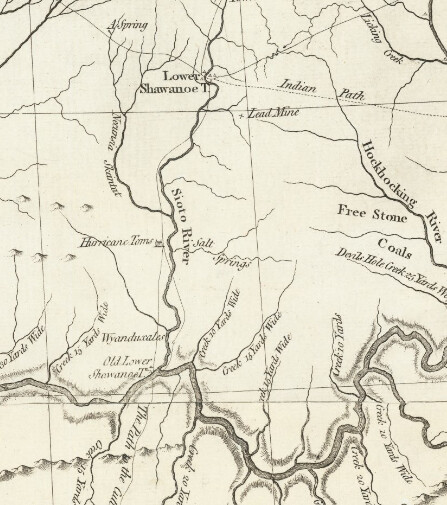 November 1778, Hutchins' map

Overcast, with a high of 73 and low of 58 degrees. Overcast in the morning, light rain in the afternoon and evening, clear overnight.