75° and Light drizzle
Image
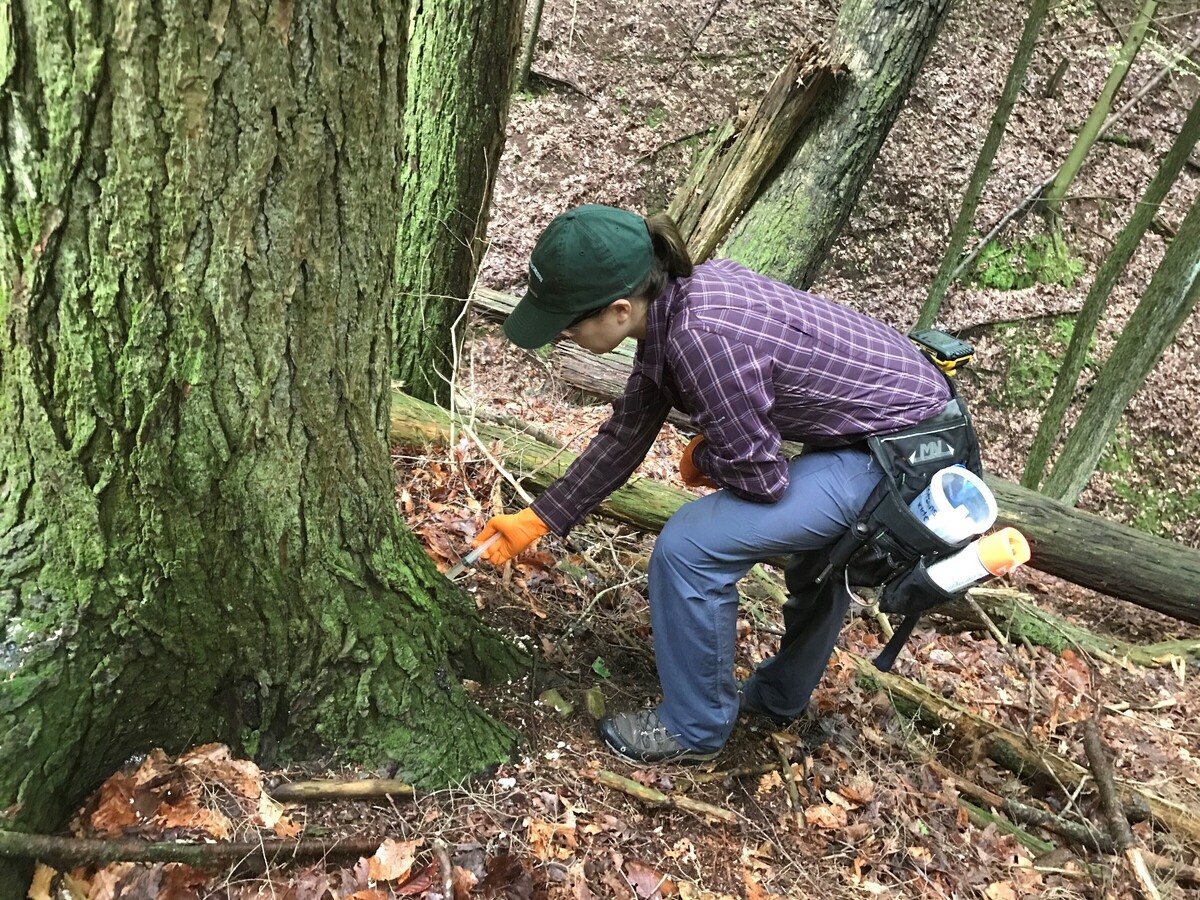
Landowners can apply for funding to treat their woodlands against hemlock woolly adelgid through ODNR's Division of Forestry now through March 20.



Story and photo courtesy of Ohio Department of Natural Resources
WARREN COUNTY, OH -- The Ohio Department of Natural Resources (ODNR) Division of Forestry is now accepting applications for a first-of-its-kind program that will provide funding to help landowners battle an invasive insect called the hemlock woolly adelgid (HWA) in their woodlands. Applications for the cost-share program are being accepted now through Friday, March 20.
The new program will provide cost-share funding for the treatment of hemlock forest areas of one to 25 acres. The payment rate for HWA control work is $700 per acre. The hemlock treatment work may be carried out by the landowner or a contractor hired by the landowner. Proposals will be accepted now through Friday, March 20, 2026. More details about the program, including the application form, are available at OhioDNR.gov/HWA
The hemlock woolly adelgid is a tiny non-native invasive insect and is currently the biggest threat to the survival of eastern hemlocks. It is mostly visible in the fall, winter, and spring, when it creates small, white, cottony masses on the underside of hemlock twigs. First discovered in the 1950s in Virginia, HWA has slowly spread throughout much of the range of eastern hemlock, causing the death and decline of millions of hemlock trees. The first discovery of HWA in Ohio was in 2012, and it is now known to occur in 24 counties. HWA feeding depletes a tree’s nutrient reserves, first causing needle discoloration, slowly progressing to branch dieback and tree death over several years.
“We are thrilled to be able to assist landowners in protecting their hemlock forests from the damage caused by the invasive hemlock woolly adelgid. Assisting private landowners with sustainable forest management is critical in Ohio, where the vast majority of forest lands are privately owned,” said Dan Balser, chief of the ODNR Division of Forestry. “This is an exciting opportunity to protect a special and ecologically valuable forest type.”
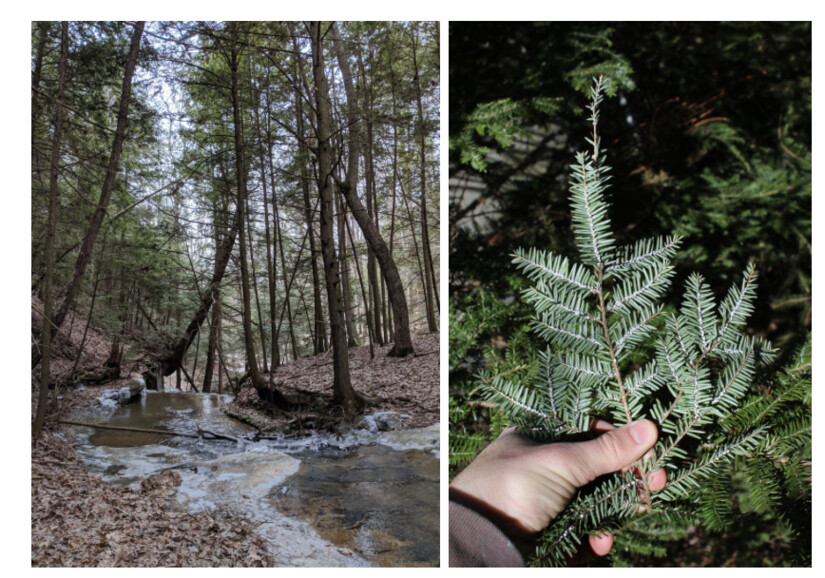 The hemlock woolly adelgid is a non-native invasive insect which can cause the death of hemlock trees. They can be found on the underside of hemlock twigs in small white masses.
Fortunately, there are tools and strategies available to protect eastern hemlock trees from the damage that HWA causes. The best rapid response measure to protect hemlock trees is the use of systemic insecticides, which can be applied to individual trees using a variety of methods, including soil application, trunk spraying, or direct trunk injection. A single treatment application can provide 5 years of protection from HWA.
The division also plans to host HWA treatment workshops this April and May to help landowners or potential contractors learn more about how to properly conduct HWA treatments in forests. Information regarding the training workshops will also be posted online.
Eastern hemlocks are evergreen trees that natively grow mainly in the eastern half of Ohio. Forests dominated by eastern hemlocks are not widespread in Ohio, but where they occur, they support unique habitats that are home to many interesting plants, birds, insects, and amphibians. The beauty of eastern hemlock forests also draws people to places like the Hocking Hills and Mohican regions in the state and nature preserves such as Lake Katharine in Jackson County.
The Ohio Division of Forestry promotes the wise use and sustainable management of Ohio’s public and private woodlands. To learn more about Ohio’s woodlands, visit forestry.ohiodnr.gov. Follow us on Facebook and on Instagram @odnrforestry.
ODNR ensures a balance between wise use and protection of our natural resources for the benefit of all. Visit the ODNR website at ohiodnr.gov.


Overcast, with a high of 82 and low of 64 degrees. Overcast in the morning, patchy rain nearby in the afternoon and evening, clear overnight.