66° and Partly Cloudy
Image



HARVEYSBURG, Ohio — Among the swords, costumes, handmade crafts and other treasures found at the Ohio Renaissance Festival, visitors can also discover something that looks rather ordinary on the outside but may hold a sparkling surprise within.
They are geodes, and for Leo Atkinson of The Geode Guys, opening one is part geology lesson, part treasure hunt.
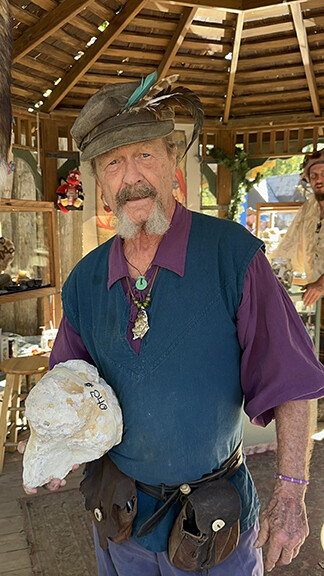 Leo Atkinson of The Geode Guys.
Atkinson and his family have spent decades introducing festival visitors to geodes — rounded rocks that can contain cavities lined with crystals. The family business has become closely associated with Renaissance festivals, where unopened geodes have fittingly been marketed as “Dragon Eggs.”
The concept has proved to be a natural fit for the fantasy and mystery of a Renaissance faire. From the outside, a geode can resemble an unremarkable rock. Only when it is cracked or cut open does its interior become visible, sometimes revealing quartz, agate or other mineral formations.
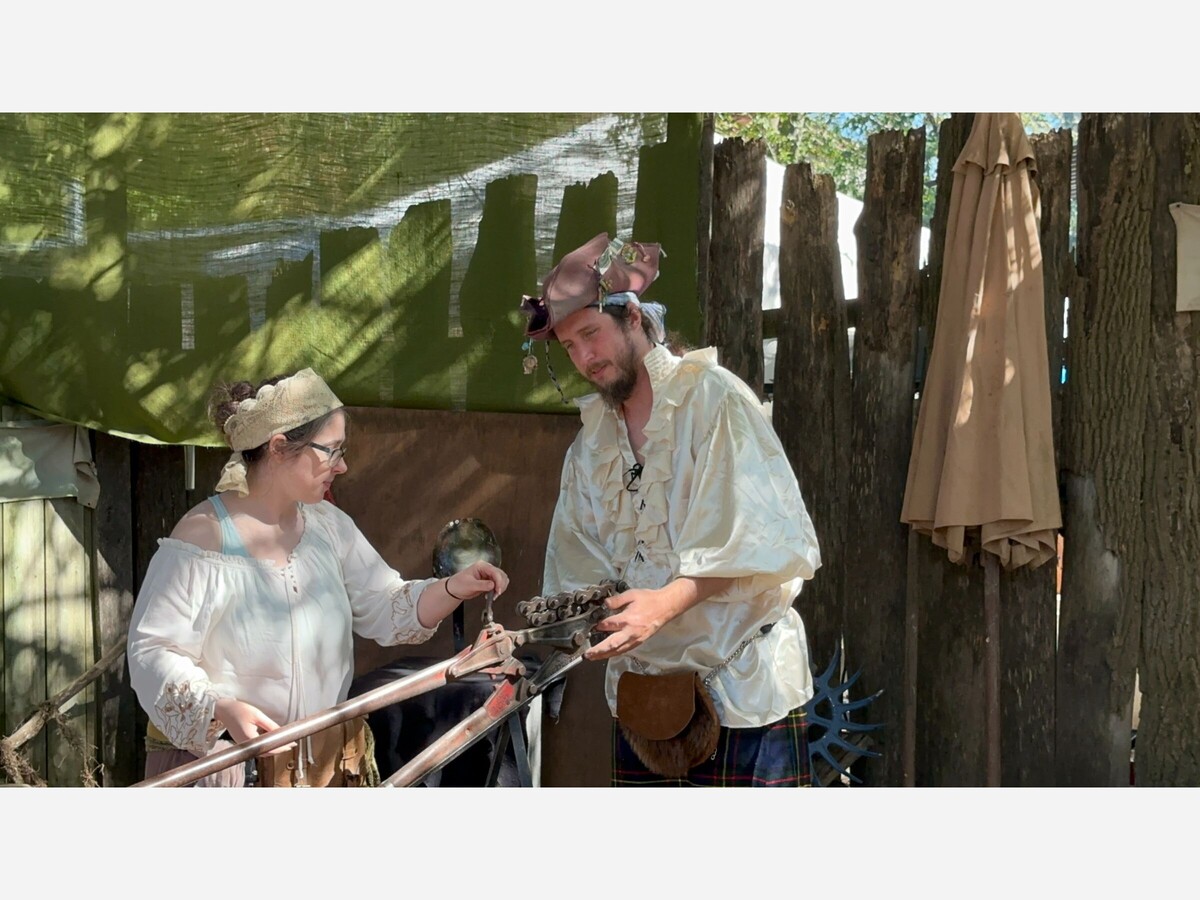
The Atkinson and his son Dusty Atkinson have nearly 60 years of combined experience working with geodes and have become known for opening these "Dragon Eggs" with a specialized cracking device they call a “Geo-tine” to see what lies within the harden stone.
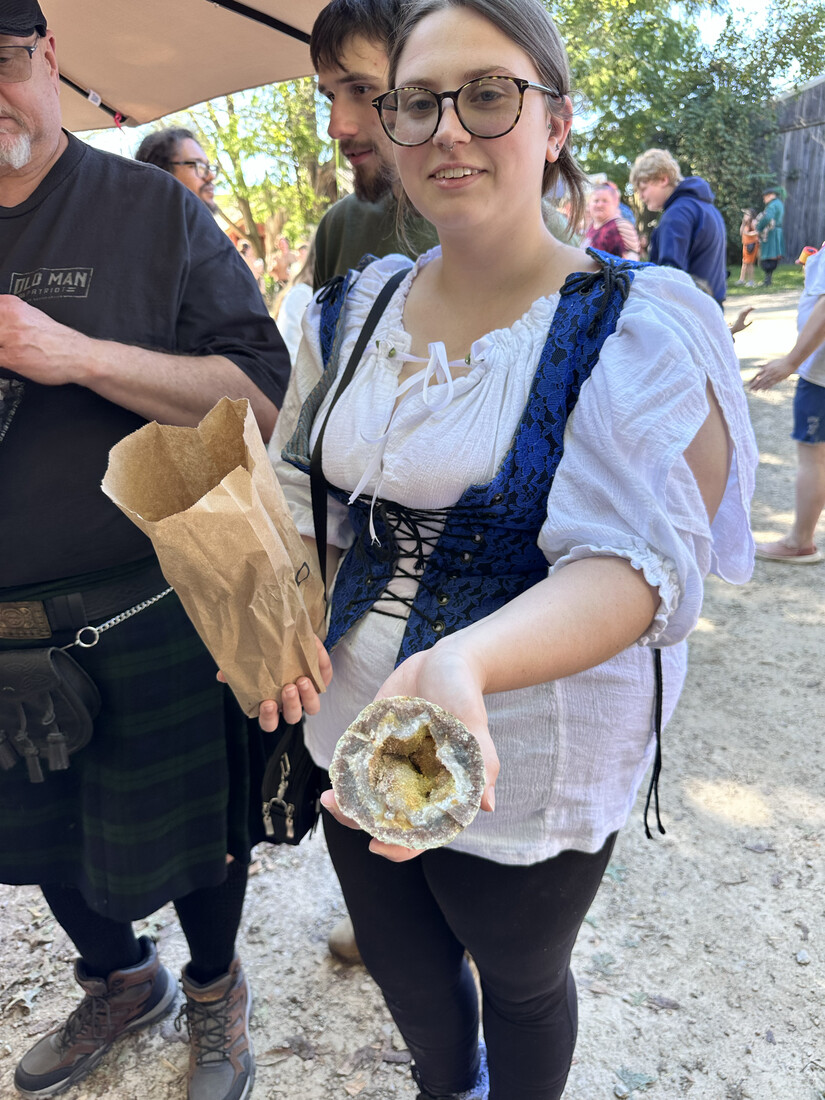 This festival goer had her "Dragon Egg" go through the "Geo-tine"
 A geode forms when minerals accumulate inside a cavity within rock. Over long periods of time, mineral-rich water can enter the hollow space and deposit layers or crystals along its interior walls.
That is why two rocks that look similar from the outside can reveal very different interiors when opened.
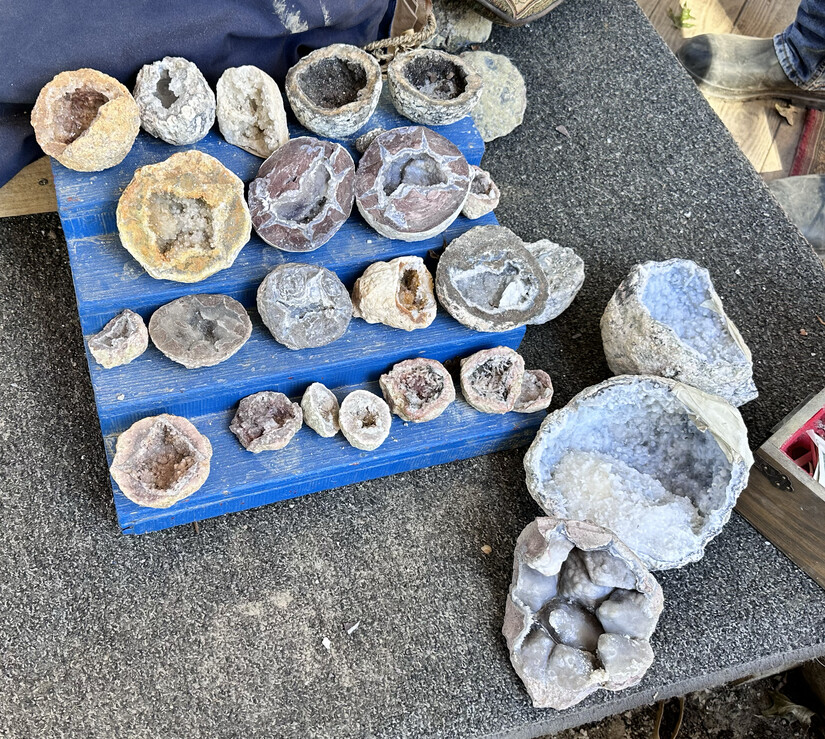 Each geode has something different to find when cracked open.
Geodes differ from agates in an important way: geodes generally contain a hollow space, often lined with crystals, while agates tend to be solid and commonly display bands of mineral material.
Even the word “geode” has ancient roots. It comes through Latin and French from the Greek geodes, meaning roughly “earth-like” or “earthy.” The English term for the crystal-lined stone came into use in the 1600s.
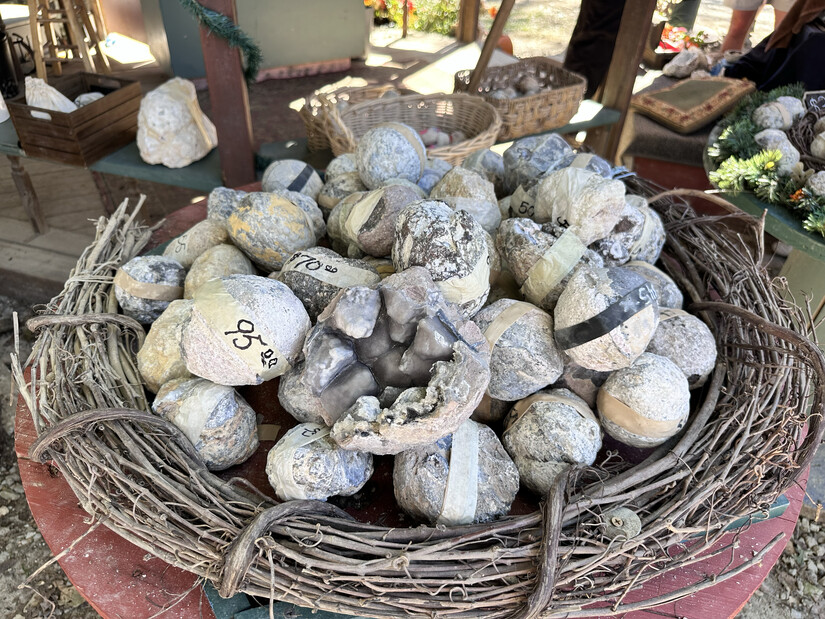 "Dragon Eggs" off many sizes can be found for purchase.
Perhaps not exactly in the modern geological sense — but unusual stones, crystals and minerals would have been very much at home in the Renaissance world.
During the Renaissance, Europeans had a strong fascination with precious and unusual stones. Wealthy collectors accumulated natural curiosities, while craftspeople cut and polished rock crystal, lapis lazuli, marble and other stones into jewelry, furniture and decorative objects. In 16th-century Italy, the art of pietre dure, or decorative work using hard stones, became especially prized among wealthy patrons such as the Medici family.
People of the time also sometimes attributed properties to stones that went far beyond their appearance. Renaissance books known as lapidaries described gems and minerals and sometimes claimed certain stones could protect their owners, improve health or possess other special powers.
Modern science gives us a very different explanation for what is inside a geode, but the fascination is surprisingly similar for there is still something irresistible about holding an ordinary-looking stone and wondering what might be hidden inside.
And at the Ohio Renaissance Festival, calling it a Dragon Egg only adds to the mystery.


Sunny, with a high of 78 and low of 46 degrees. Sunny in the morning, clear overnight.