77° and Overcast



Image
Story and photo courtesy of Turtle Creek Daughters of the American Revolution (DAR)
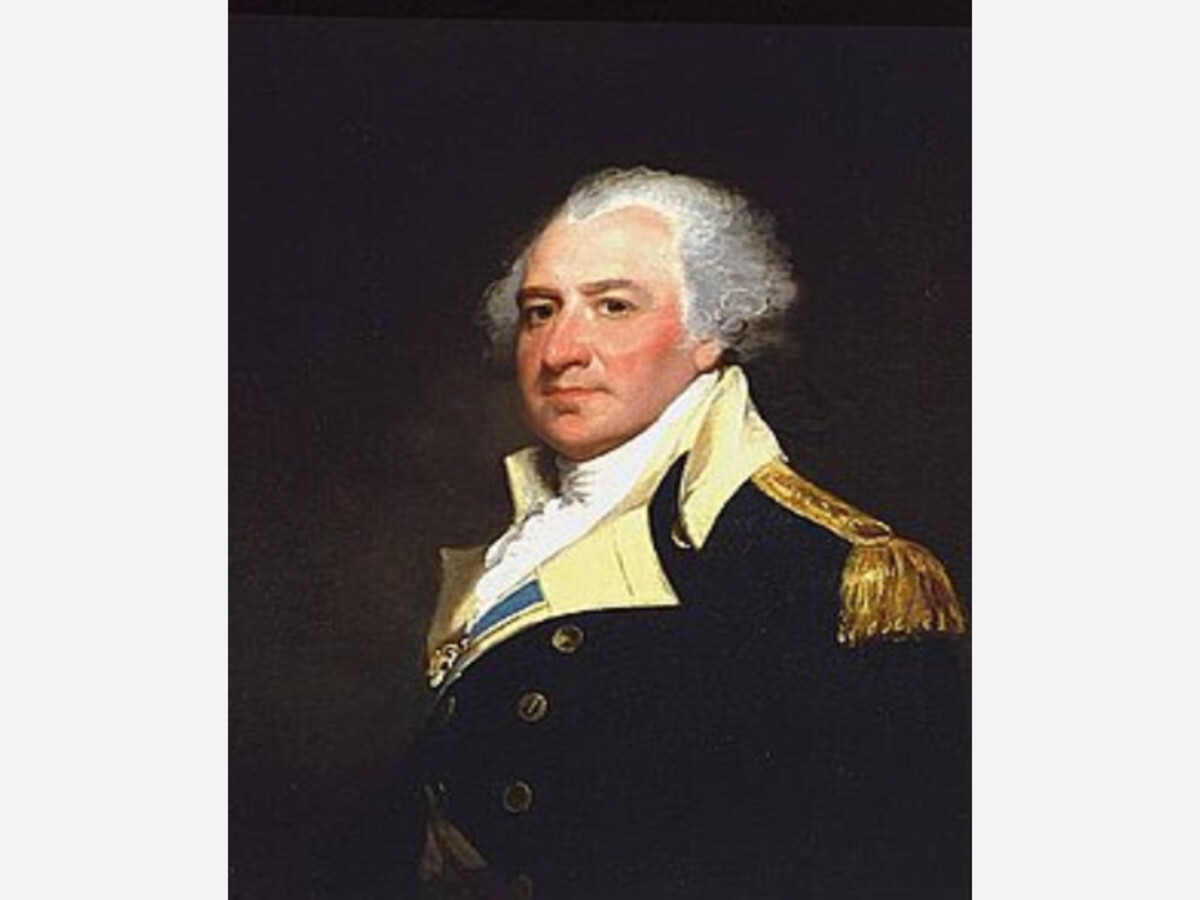
WARREN COUNTY, OH -- The Constitution of the United States was signed on September 17, 1787 in Philadelphia at the Constitutional Convention by 39 delegates from 12 states. One of these signers, from the state of Pennsylvania, was Thomas Mifflin.
Thomas Mifflin was born into a prominent Quaker family in Philadelphia on January 10, 1744 to parents John and Elizabeth. He attended the College of Philadelphia (now the University of Pennsylvania) and graduated in 1760 at the age of sixteen. Following in his father’s footsteps, who had been a successful merchant, Mifflin went on to work in trading posts for a number of years and eventually established a thriving mercantile business with his brother. In 1767 he married his second cousin, Sarah Morris.
Mifflin developed an interest in politics, again like his father who had held a number of positions. He participated in nonimportation meetings in 1769 and 1770, held to pledge boycotts of British goods, and in 1772 he was elected to the Pennsylvania Assembly showing his support of colonial opposition to British policies. From there he was sent in 1774 as a delegate to the Continental Congress, where he signed the Continental Association, a further formal pledge to support those boycotts until Britain’s restrictive policies were revoked.
With the start of the Revolutionary War, Mifflin joined a militia group in Pennsylvania as a major and soon thereafter resigned his political posts to act as an aide-de-camp to George Washington. With his trade experience, he was made the Quartermaster General of the Army.
Mifflin took part in battlefield engagements, seeing action that included the Battles of Long Island, Trenton, and Princeton. At Trenton, he persuaded his unit of 1500 men to not leave despite their enlistment periods ending by giving an inspirational speech about the American cause and a soldier’s duty. In 1777, after complaints regarding his conduct as quartermaster, he did resign that position, and submitted his final, formal resignation of his commission in 1779.
Mifflin’s true legacy is grounded in his continued involvement with American politics at both the state and national levels. In 1778 he served in the new state assembly of Pennsylvania. He was elected to the Confederation Congress for
1782 - 1784, being made President of that body in November 1783. From 1785 to 1788 Mifflin was a member of the Pennsylvania General Assembly and held the position of Speaker. In 1787 he was sent as a delegate from his home state to the Constitutional Convention in Philadelphia, gathered initially to amend the Articles of Confederation, but ultimately creating a new document and framework for the federal government. September 17th, 1787 that new document, the Constitution of the United States, was signed with Thomas Mifflin’s signature appearing directly below Benjamin Franklin’s for the state of Pennsylvania. He then served as the final President of the Pennsylvania Supreme Executive Council from 1788 - 1790. In 1790 Mifflin was elected the first governor of Pennsylvania by a huge landslide, garnering 98% of the vote. He held the position for nine years over three terms until 1799. Mifflin battled illnesses throughout his terms as governor and passed away January 20, 1800 in Lancaster, PA.
Mifflin is well remembered by the numerous locations in Pennsylvania that are named after him including several towns, townships and Mifflin County. In addition, Fort Mifflin (originally called Fort Island Battery or Mud Island Fort) was renamed for him in 1795 and is the oldest fort in continuous military use in the U.S. From his military service to early and continuing work in various governing bodies, to his leadership as governor, Thomas Mifflin left a strong mark on the foundation of the United States.


Sunny, with a high of 78 and low of 52 degrees. Sunny in the morning, overcast in the afternoon and evening, clear overnight.