Image



Courtesy of Dayton History, a privately funded nonprofit organization, owns and operates Carillon Historical Park, Hawthorn Hill, and Patterson Homestead
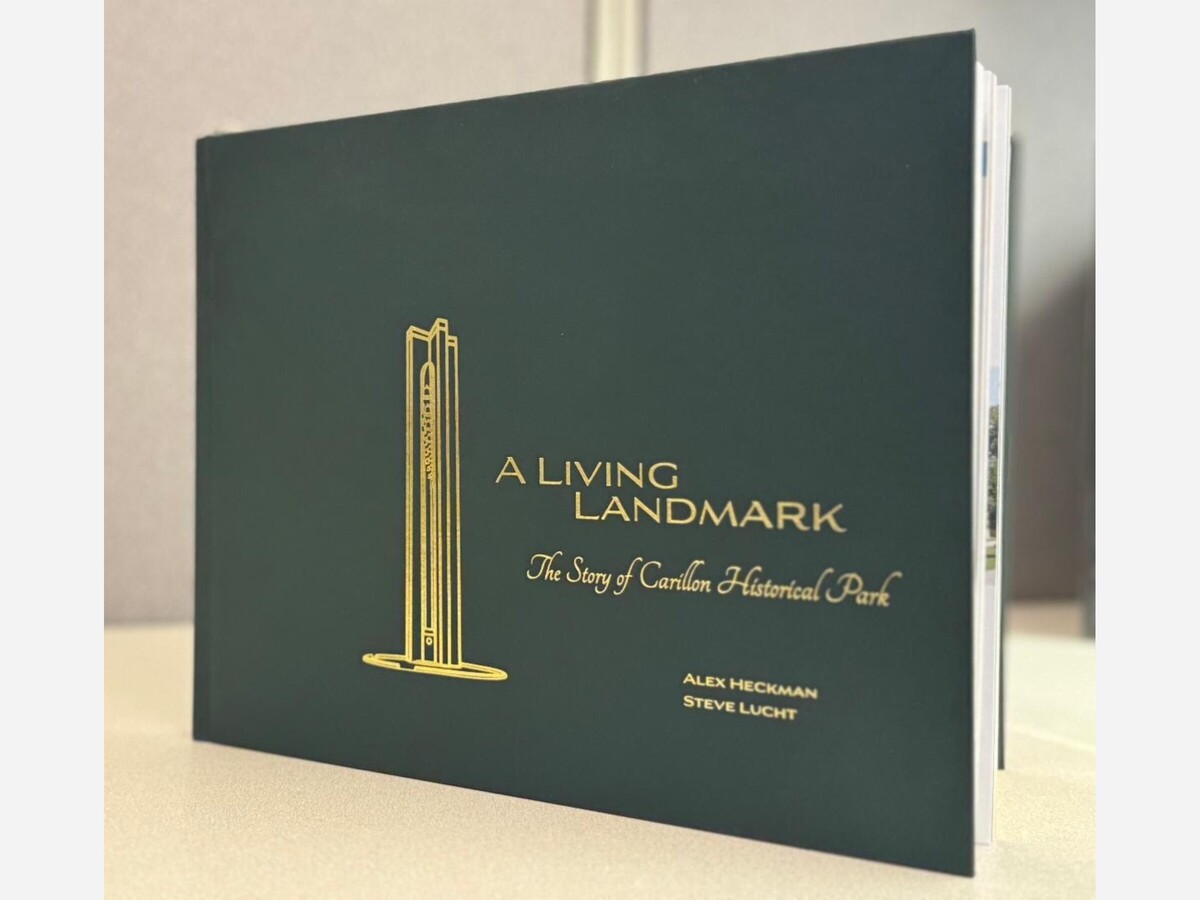
DAYTON, Ohio — To commemorate Carillon Park's 75th anniversary, Dayton History has published A Living Landmark: The Story of Carillon Historical Park. Written by Vice President of Museum Operations Alex Heckman and Curator Steve Lucht. The deeply researched volume chronicles the people, events and circumstances that transformed an isolated swamp into a nationally significant 65-acre open-air museum. Together, Heckman and Lucht have dedicated 45 years to Carillon Park. A Living Landmark — a limited-edition, illustrated, hardbound, 222-page coffee table book — is now available for $35 in the Carillon Park Museum Store, just in time for the holidays.
"This book is the brainchild of Tony Huffman, a tireless advocate for Carillon Park and chairman of its first-ever capital campaign, Imagine Tomorrow!, during the 1990s," said Heckman. "Tony's advocacy and fundraising prowess significantly enhanced the park's campus and positioned it well for its continued growth and success in the 21st century. This publication was produced to document major Carillon Park initiatives and to provide a timeline of changes to the property."
With encouragement from longtime Carillon Park supporters John and Becky York, the book was made possible by the generosity of The George and Clista Martin Charitable Fund of The Dayton Foundation. Heckman and Lucht then brought the long-awaited book to life.
"Alex has been here for 26 years. I've been here 18," said Lucht. "We thought we knew the park inside and out. But as we began researching, we were amazed by the stories we unearthed."
Among numerous discoveries, the authors uncovered the tale of M.S. Benn, the prominent Dayton developer who purchased the land that would become the park, then platted the grounds, complete with street names — Goldenrod, Palafox, Riverside and more — and sold lots for $29 apiece before abandoning the project. They unearthed evidence that founder Col. Edward A. Deeds envisioned building Carillon Park years earlier than previously believed. And they rediscovered old newspaper lines that captured the museum’s early promise.
Virginia has its Williamsburg, Michigan its Greenfield Village. Dayton … now has its Carillon Park.
— Dayton Daily News, June 3, 1950
"At the time, only 24 years had passed since John D. Rockefeller, Jr., completed Colonial Williamsburg, and just 17 since Henry Ford unveiled Greenfield Village," says Heckman. "Privately funded open-air museums were gaining momentum, and with a city as world-changing as Dayton, Col. Deeds knew it had to join the ranks."
From the beginning, Dayton knew what Deeds had built: a museum that might one day stand alongside those of Rockefeller and Ford. And while there is further to go, Carillon Park has grown steadily toward that vision.
"In 75 years, only three people have helmed Carillon Park: Joseph Usellis, Mary Mathews and Brady Kress," said Lucht. "Together, they’ve safeguarded millions of artifacts; saved historic buildings; added exciting new attractions; expanded educational programs for the 50,000 schoolchildren who visit each year; and preserved Dayton’s history for future generations."
Today, on its 75th anniversary, Carillon Historical Park continues to educate, to entertain and to inspire visitors from around the world. Still, this is a living landmark — its story is still being written. And for an organization built on history, the best may be yet to come.



Sunny, with a high of 93 and low of 69 degrees. Sunny in the morning, patchy rain nearby for the afternoon and evening, clear overnight.