

Image
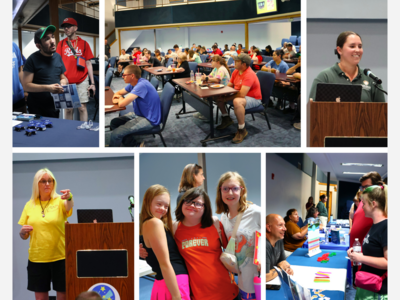
Photos and story courtesy of -Leslie R. Dye, MD, FWCPDOH
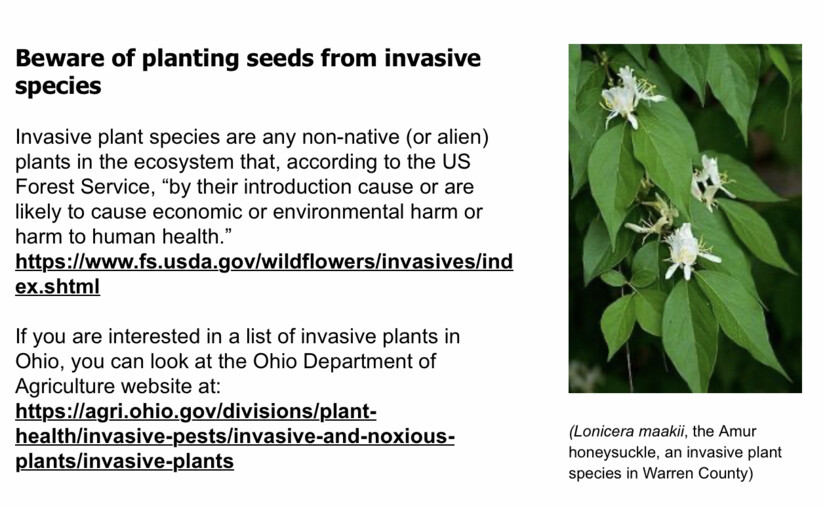
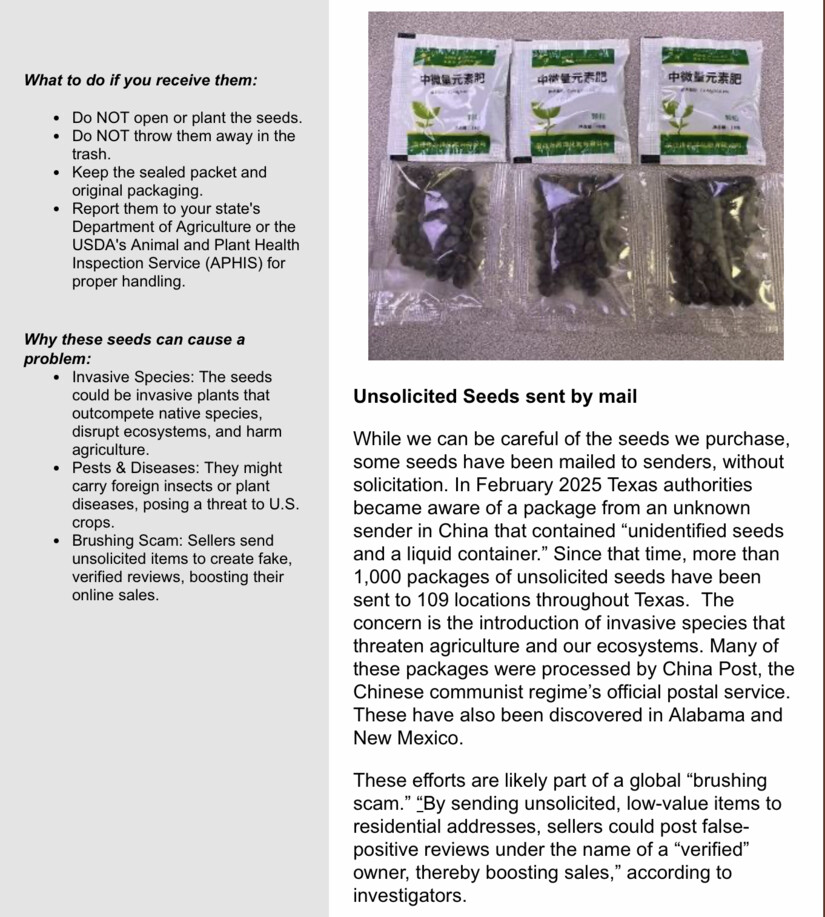
“According to the World Conservation Union, invasive alien species are the second most significant threat to biodiversity, after habitat loss.”
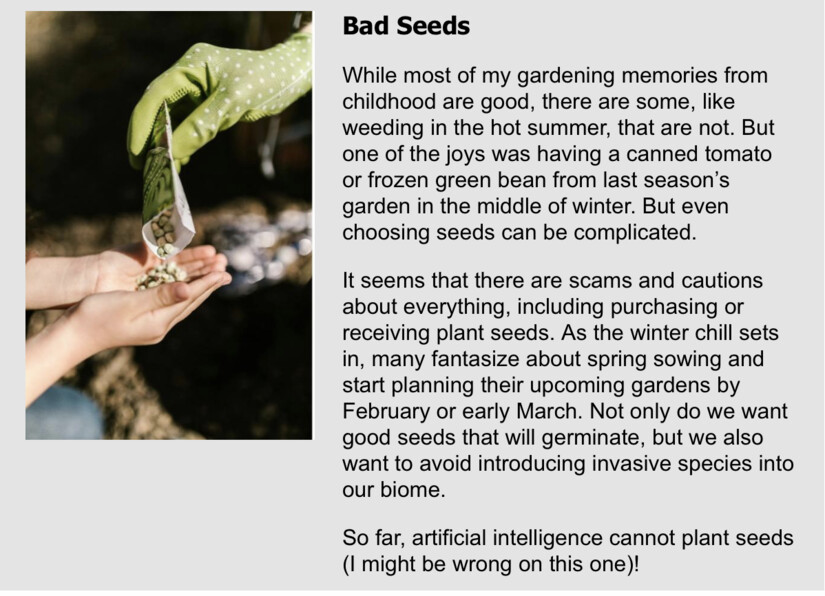
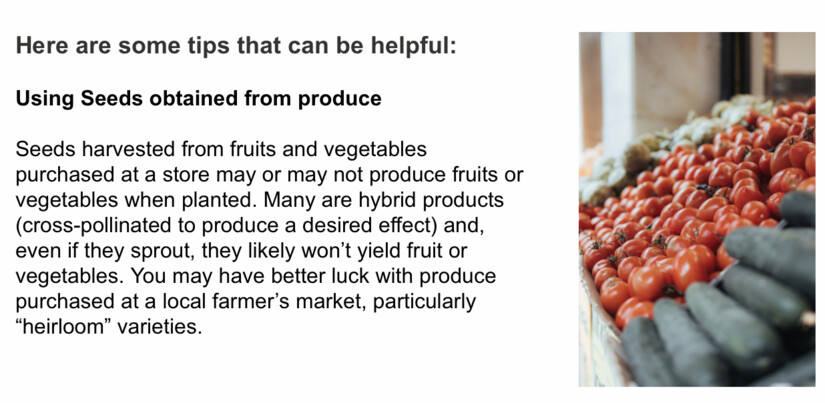
A simple germination test can determine if seeds (particularly seeds packets from an earlier season) will be good for planting. Every year that a seed ages results in a lower germination rate, but some seeds may last more than one year (lettuce seeds often last 3 years).
Test larger seeds by placing them in a glass of warm water. If the seeds are floating after about 15 minutes, they probably will not sprout.
For smaller seeds (tend to float in a glass of warm water regardless)
It is also important to understand the terminology when purchasing seeds:
Look for companies that clearly label their varietals and if you are growing a non-GMO garden, find those who have signed the Safe Seed Pledge, a commitment by seed companies to not knowingly buy, sell, or trade genetically engineered (GE) seeds.



Sunny, with a high of 91 and low of 68 degrees. Sunny in the morning, clear overnight.