59° and Overcast



Image
January 13, 1773 - January 22, 1773 A JOURNAL OF TWO VISITS MADE TO SOME NATIONS OF INDIANS
Wednesday morning, on January 13, 1773, we find the good reverend at the house of Mr. Irwin. None of the Shawnee here had ever seen a preacher in these parts; yet King Hardman extended “the right hand of fellowship” to Reverend David Jones.
King Hardman, or Kishanosity (written by Jones as Kishshinottisthee), was a Shawnee civil leader living near Deer Creek in present-day Ohio in the early 1770s. He appears in both the American Indian Quarterly and the Journal of Richard Butler. When Jones visited in January 1773, he described Hardman as “one of the head men of this nation,” showing his place among the village leadership within the Shawnee political system. Authority among the Shawnee rested not with a single chief but with councils of respected men. Hardman’s contemporaries included well-known figures such as Cornstalk, Blue Jacket, and Blackfish, each guiding neighboring towns.
Before the conference began, Mr. Irwin, Jones, King Hardman, and his companions gathered for breakfast. Jones recorded the table simply but vividly: “fat buffalo, beaver’s tails, and chocolate.”
The meal was both substantial and diplomatic — the kind of fare offered to guests when serious conversation was expected.
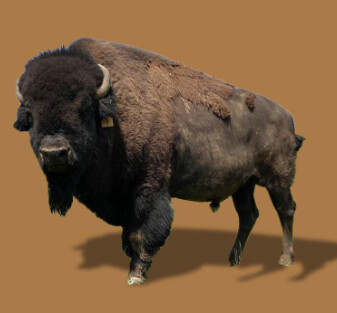
The buffalo meat was likely roasted or stewed cuts from the hump or ribs of the American bison, animals that still roamed parts of the Ohio country in the early 1770s. Early travelers often described buffalo meat as rich and slightly sweet, especially when the animal was well-fattened during winter.
 Kimi Werner @ themeateater.com
How to cook beaver tail with Kimi Werner- https://www.themeateater.com/cook/cooking-techniques/video-how-to-cook-beaver-tail
The beaver tails were considered a delicacy throughout the frontier. The broad tail of the beaver contains a thick layer of fat beneath its scaly skin. Hunters typically roasted the tail whole over coals until the outer skin loosened, then peeled it away to reveal a soft, oily meat inside. The result was rich and buttery — closer to marrow than fish — and prized by both Native hunters and colonial settlers.
 “An American with his chocolate pot and his cup.”
Chocolate, though it may seem unusual at a frontier breakfast, was common in the eighteenth century. Travelers often carried compressed cakes of ground cacao mixed with sugar and spices. To prepare it, the chocolate was shaved or broken into pieces and whisked into hot water or milk. A wooden whisk called a molinillo was sometimes used to froth the drink. The result was a thick, warming beverage, slightly bitter and often spiced with cinnamon or vanilla. Chocolate was widely taken in the morning because it was considered strengthening and easy on the stomach.
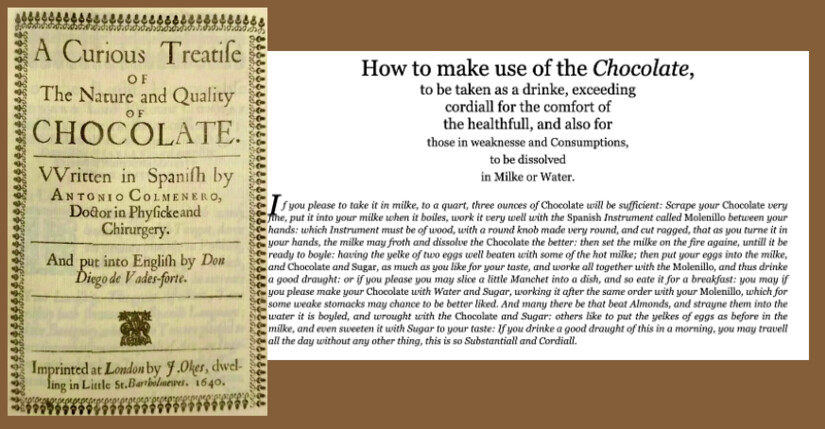 The Project Gutenberg EBook of Chocolate: or, An Indian Drinke, by Antonio Colmenero de Ledesma
Later during his stay, Jones recorded other foods offered by Hardman’s household. The Shawnee leader treated him with hickory nuts, which Jones declared “much superior to any of that kind in our eastern world.” The forests of the Scioto and Deer Creek valleys were rich in shagbark and shellbark hickories whose large, sweet kernels made them a prized winter food.

On another day when Jones felt ill, Hardman’s wife brought him a dish she thought suitable for a weak stomach: dried pumpkin that had been rehydrated and boiled, served with bear’s oil.
Pumpkins and squash were often sliced and dried in autumn so they could be stored through the winter months. When boiled, they softened into a mild stew, and a spoonful of bear fat added both flavor and energy. Bear oil was one of the most valued fats in the Ohio country, used much like butter or lard in European cooking.

Taken together, these foods paint a clear picture of life in a small Shawnee settlement along Deer Creek in the winter of 1773. The meal was simple but nourishing, drawn from the surrounding forests, rivers, and fields: buffalo from the plains, beaver from the streams, nuts from the hardwood woods, and preserved vegetables from the autumn harvest. In such settings diplomacy often began not with speeches, but with shared food and conversation around a morning fire.
During these days the winter deepened. Jones noted that nearly six inches of snow fell, and for several days the cold felt much the same as winter weather in Philadelphia, despite the region lying slightly farther south.
Not long before Jones departed the town, two British officials arrived: Alexander McKee and Major Smallman. McKee served as agent for the British Indian Department and wielded considerable influence among the tribes. Jones explained his religious mission to the agent, who received the idea politely and promised whatever assistance he could give to help the traveler continue his journey.
Jones was also searching for an interpreter, having learned that his former translator had gone down the Ohio River toward the Wabash. McKee recommended a man called Caesar, said to understand something of religion and therefore suitable for such work. Unfortunately, Jones never encountered the man again, and the two parted expecting to meet later at Chillicothe.
Reluctantly, Jones left the Deer Creek settlement without having an opportunity to address the people more fully. Without an interpreter he could make little progress. Thus, on Friday the 22nd, he and Mr. Irwin set out for the larger Shawnee town of Chillicothe.
Chillicothe, Jones recorded, was the principal Shawnee town of the region. It stood north of a broad plain along a branch of Paint Creek. That open plain served as the community’s cornfield, supplying much of the town’s food. The houses there were built of logs and scattered irregularly, each family placing its dwelling wherever it chose.
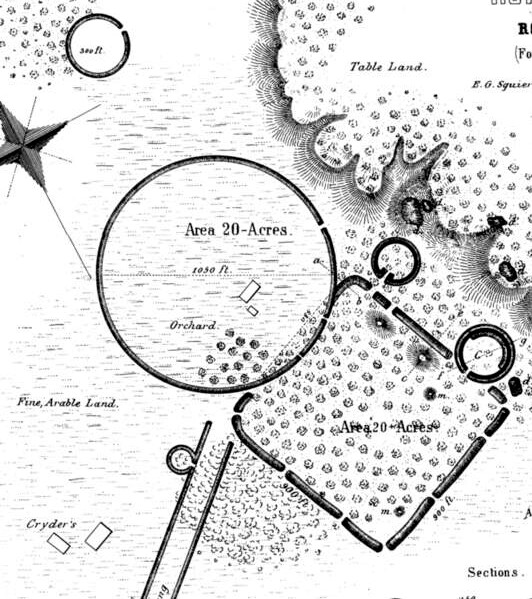
Nearby, Jones observed the remains of an ancient earthwork—a square enclosure of perhaps fifteen acres with gates at the corners and center, and a circular embankment extending from its western side. The circular earthwork enclosed a spring. Local traders told him that a similar structure could be seen along the Scioto River. These mysterious fortifications, Jones concluded, must have been built long ago by a people skilled in working iron, though their true history remained unknown to those who now lived in the land.
Previous episode
 Part 3 - The Deercreek Frontier
Next Episode
 Part 5 Crooked Nose Has The Best Horses


Overcast, with a high of 80 and low of 59 degrees. Overcast for the morning,